Among security experts, the consensus seems to be that very little will happen today. This may be in part because of the high amount of publicity Conficker has received, but then again April 1 is not the first time Conficker has been programmed to change the way it operates. Similar trigger dates have already passed with little change, including January 1, according to according to Phil Porras, a program director with SRI International. Security experts at Symantec, the maker of Norton Antivirus, also believe the threat is overblown and says Conficker today will "start taking more steps to protect itself" and "use a communications system that is more difficult for security researchers to interrupt."
Technology companies and experts across the globe have been working together to halt the spread of Conficker, disrupt its communications and uncover who created the worm. Microsoft has even issued a $250,000 bounty for information leading to the arrest and conviction of Conficker's authors. Despite the security sector's best efforts, very little is known about the origins of Conficker or its purpose. Nevertheless, some breakthroughs have been achieved. On March 30, Security experts with the Honeynet Project discovered a flaw in Conficker that makes it much easier to detect infection. IBM researcher Mark Yayson also believes he has discovered a way to "detect and interrupt the program's activities," according to The New York Times.
Since the Conficker worm was discovered in October 2008, the malware has only received programming updates from its author and worked to infect other computers. Conficker is believed to have infected 10 million computers worldwide mostly in Asia, Europe and South America. According to IBM, only 6 percent of North American computers have been infected.
While today may be a non-event, Conficker could be used to create harm in the future. Possiblities include a massive botnet, which would give Conficker's authors control over millions of computers worldwide. The botnet could then be used to attack corporate or government networks, commit identity theft, or deliver massive amounts of spam. Security experts warn that all Windows users must make sure their operating system and antivirus programs are up to date with the latest patches and virus protections. So far, Windows is the only operating system known to be vulnerable to Conficker.
Barack Obama met the Queen at Buckingham Palace today and gave her the gift of an iPod, according to a British Telegraph report.
The iPod was loaded with video footage and photographs of the Queen's 2007 United States visit to Richmond, Jamestown and Williamsburg in Virginia. In addition USA Today says that Obama also gave the Queen a "rare songbook signed by Richard Rodgers".
In return, the Queen gave President Obama a silver framed signed photograph of herself and the Duke of Edinburgh. This is apparently a standard gift for visiting dignitaries.
Many have criticized the gift considering it inappropriate for the Queen especially since Queen may already have an iPod (6GB silver Mini) which was bought in 2005 at the suggestion of Prince Andrew.
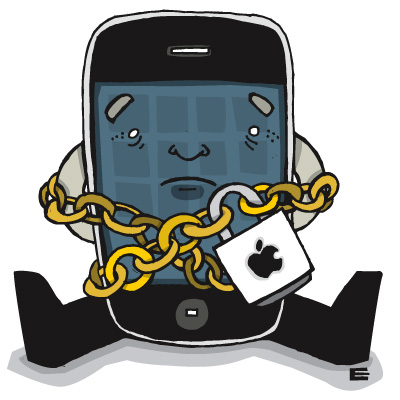
The latest iPhone SDK agreement now forbids developers from jailbreaking or creating apps for jailbroken phones, according to an ArsTechnica report.
The new iPhone Developer Program License Agreement states the following:
(e)You will not, through use of the Apple Software, services or otherwise, create any Application or other program that would disable, hack or otherwise interfere with the Security Solution, or any security, digital signing, digital rights management, verification or authentication mechanisms implemented in or by the iPhone operating system software, iPod touch operating system software, this Apple Software, any services or other Apple software or technology, or enable others to do so; and
(f) Applications developed using the Apple Software may only be distributed if selected by Apple (in its sole discretion) for distribution via the App Store or for limited distribution on Registered Devices (ad hoc distribution) as contemplated in this Agreement.
This means that registered developers can no longer jailbreak their own phones or help others to jailbreak their phones. Developers are also forbidden from using the iPhone OS, SDK, and any other developer tools to create applications that are distributed anywhere but the App Store or via Ad Hoc distribution
No, that's not a BlackBerry, but HTC's latest Windows Mobile smartphone seems to take some design cues from RIM with its full QWERTY keyboard and trackball navigation. The HTC Snap's headlining feature, however, is a new e-mail management feature called "Inner Circle."
Users can bring e-mail from a preselected group to the top of their inbox by pressing a dedicated key on the Snap. I can see the Inner Circle feature being a huge boon to enterprise customers who receive an overwhelming amount of e-mail daily. This feature will help prevent any missed high priority e-mail messages and cut down on time spent searching through a full inbox.
The HTC Snap has 3G connectivity, a 2-megapixel camera with video capture, and a vendor talk time of 8.5 hours. Measuring 4.6 by 2.4 by 0.5 inches, the HTC Snap is similar in size to the BlackBerry Curve 8900 on T-Mobile. An unlocked HSDPA version under the name HTC S522 will be available in the U.S. this summer.
Every year, the first of April is a time for an incredibly amount of creativity online. And today, April Fool's Day, will not disappoint.
I woke up this morning to find an amazing array of head-scratching technological advancements (PC World has the scoop on a Tivo feature). Some I imagine would actually be fun to use, others I'm not so sure. For example, I am not sure how wise it is to switch your Gmail to Autopilot or for Qualcomm to fill the skies with Wolfpigeons. It also seems a little strange to use facial gestures in the latest version of the Opera browser, and for The Guardian to forgo the printed page for an all-Twitter format.
But like I said, who am I to judge the wonderful ingenuity of technological wizards? Here then is my top 10 list of technological marvels and milestones for April 1, 2009:
Reddit joins the Diggnation: Well, it looks like the crowd-sourcing wars are one step closer to being over. Now that Reddit has been reborn as Reddigg, I'm sure it's only a matter of time before we also see DiggUpon, Yahoo! Diggzz and Digglicious. Isn't uniformity grand?
Google develops AI: It's an amazing day for humanity now that Google has created the first real instance of artificial intelligence or Cognitive Autoheuristic Distributed-Intelligence Entity (CADIE). I'm not sure what that means, but CADIE's effect could be profound. One of CADIE's initial projects was to redefine web design principles for the social-networking age. She then took the next logical step of seizing control of Google for herself. If you want to see what CADIE is up to, you can follow her on her own blog and YouTube channel.
Technologizer celebrates 45 years: It's been a long time since Technologizer opened its doors in 1964. Those were heady times when the online magazine charged an "hourly access fee of $15,000," and its "network ran at 300-bpw (bits per week)." Since then, it introduced a paper edition, embraced the worldwide Web, and was the first magazine to be distributed through breakfast cereals. It's been an amazing and historical ride so far, and I'm sure it will break even more boundaries in the years to come. Congratulations Technologizer.
Qualcomm's Wireless Convergence: The plan is simple enough: put tiny base stations in pigeons to create a wireless network accessible in even the most remote locales. If you're in range of a digital pigeon you can get online; it's that simple.
However, Qualcomm took it one step further by creating the Wolfpigeon, which will be more resistant to the cold and feral cats than a regular pigeon. Of course, to keep the Wolfpigeon population under control they came up with several safeguards. It's all very complex, so watch this video to get a complete understanding of how it works.
Guardian switches to Twitter: I know times are tough for the newspaper industry, but this is an incredibly dramatic step. Britain's Guardian newspaper has decided to give up print for an all-Twitter format. The news in 140 characters or less to capitalize on the Guardian's "position at the cutting edge of new media technology." This is a very modern idea, but the Guardian takes it one step further since even the Guardian's archives are going to be Twitterized. Here are a few examples of stories that have already made the switch, "OMG Hitler invades Poland, allies declare war see tinyurl.com/b5x6e for more"; and "JFK assassin8d @ Dallas, def. heard second gunshot from grassy knoll WTF?"
YouTube goes head-over-heels: We always knew Google was thinking ahead, but now they're thinking in even more directions.
According to Google's research, "modern computer monitors give a higher quality picture when flipped upside down -- kind of like how it's best to rotate your mattress every six months. You might find that YouTube videos look better this way." You can also check out this page for handy tips to get the most out of your new viewing experience. Google also has a link in every video page to revert back to the original YouTube look if this concept is just too advanced for you.
Amazon FACE: Amazon has taken cloud computing literally with its Floating Amazon Cloud Environment (FACE). Using modern airships, Amazon literally brings the cloud to you. The blimps have onboard data storage and can hover above your location for up to a month. You can communicate with FACE via WiMax or laser. If you think FACE is for you, act quickly because Amazon warns, "availability is limited and this may be a one-time, perhaps even a one-day offer."
Gmail Autopilot: It's true. Sometimes it can be a real pain to reply to every e-mail. Now, thanks to CADIE, you can let Gmail do it for you. After analyzing up to 100 of your messages, Gmail Autopilot will gain enough information to reply to e-mail as if it were actually you. There is also an authenticity control panel to adjust for "tone, typo propensity, and preferred punctuation."
Palm Pre: Palm is all about the Pre right now. Instead of amazing advancements in connectivity or revolutionary tools, Palm says it will make an announcement about the Pre at the Web 2.0 Expo in San Francisco. You can follow on its blog or on Twitter. [Editor's Note: Palm says this is a real announcement and not an April Fool's joke.] Not sure what that announcement will be, but maybe the Pre will be adding features like those found in this video:
So that's the best of the best for April 1, 2009. I hope you enjoyed this quick tour of the greatest advancements for this year. I can't wait to see what will be coming our way in 2010.
Yahoo has posted a video preview of Yahoo Messenger for iPhone on their blog.
Our new Yahoo! Messenger for iPhone application will be available soon! We announced it tonight in conjunction with the CTIA Wireless conference, so we want to give you a sneak peek at it here on the blog. Check out the demo video below. We’ll let you know when Yahoo! Messenger for the iPhone is available to download!
Jonathan Oxer has customized his Mazda RX-8 allowing it to be controlled remotely via an iPhone or iPod touch web app.
His objective was to have his vehicle connected live to the Internet 24x7. To do this he used an Alix-1 motherboard, a USB hub, a charge circuit, and a deep cycle 28A/h sealed-lead-acid battery. The system was installed in the trunk of the vehicle is charged using an "intelligent" battery charger which tops up the battery whenever the vehicle is running.
Oxer then connected various systems to the computer such as: OBD-II interface, 3G mobile broadband, Ignition Manager, Wifi, RFID reader, GPS, and Audio.
----- The car's webserver provides a password-protected web interface optimised for full-screen display on an iPod Touch or iPhone running the SOPODS full screen web browser. The web interface has three screens: 1) Control, which provides a top-down view of the car with buttons for start, stop, lock, unlock, accessory power, and boot release; 2) Telemetry, which displays real-time data acquired from the engine management system such as RPM, vehicle speed, coolant temperature, throttle position, etc; and 3) Location, which uses a Google Maps mashup to display the current location of the vehicle on a map using current GPS data. -----











 Posts
Posts

